
Your Garage Door Springs Are Doing More Work Than You Think
Most homeowners in Virginia Beach don't think much about their garage door springs — until the morning they press the opener button and nothing happens. Or worse, they hear a loud bang from the garage that sounds like a gunshot. That bang is usually the sound of a torsion spring snapping, and it's one of the most common garage door emergencies we respond to.
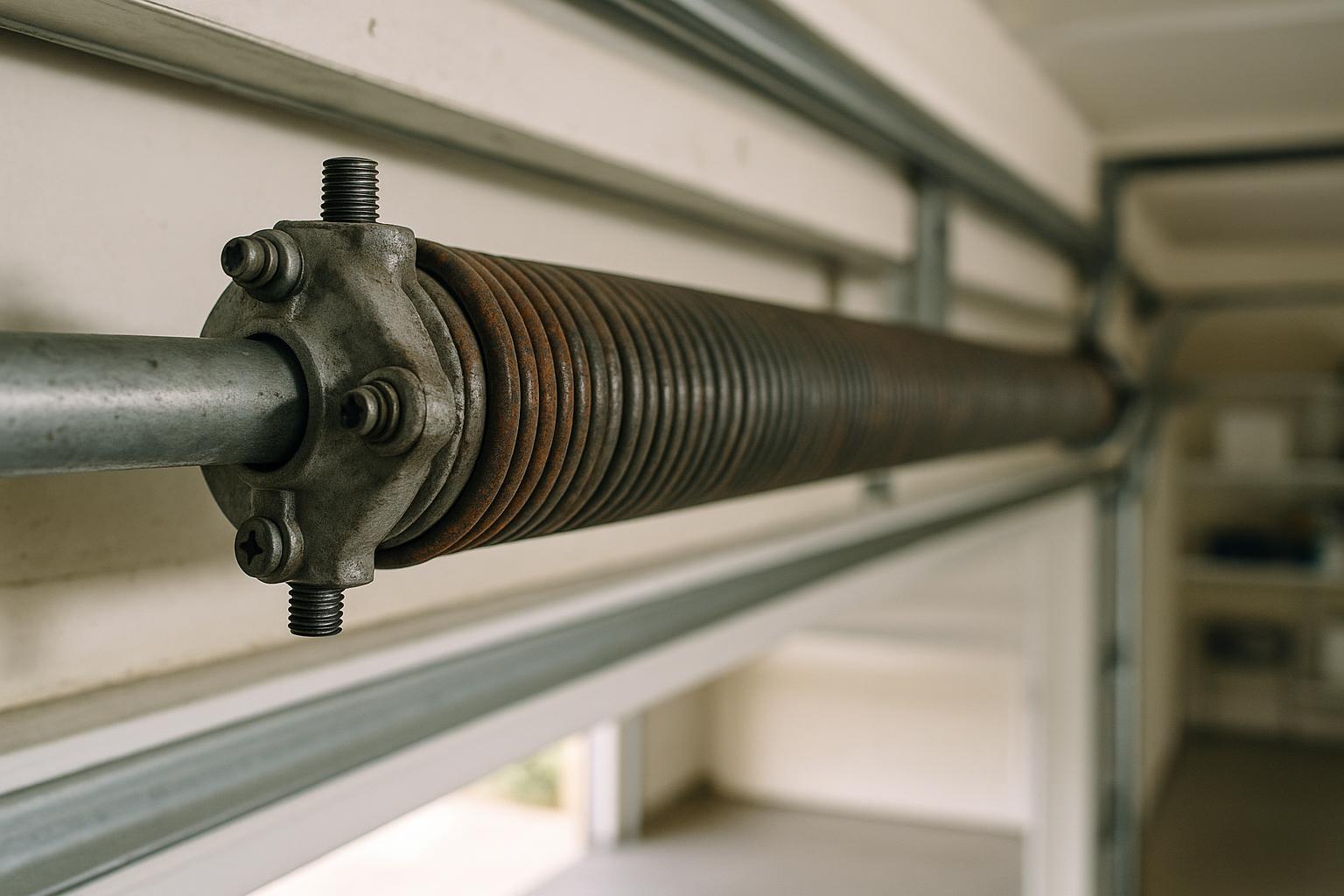
Garage door springs are the real workhorses of your entire door system. They bear the full weight of the door — which can range from 130 pounds for a single door to over 400 pounds for a heavy wooden double door — and they cycle up and down thousands of times over their lifespan. Understanding when they're wearing out can save you from unexpected breakdowns, costly damage, and even serious injury.
How Garage Door Springs Work
Before diving into the warning signs, it helps to understand the two main types of springs used in residential garage doors:
- Torsion springs are mounted horizontally above the door opening. They use torque to lift the door and are the most common type found in modern garage door systems.
- Extension springs run along the horizontal tracks on either side of the door. They stretch and contract to assist with lifting. These are more common in older installations.
Both types are under extreme tension, which is why spring replacement is one of the most dangerous garage door repairs and should always be handled by a trained technician. Attempting a DIY spring replacement can result in serious injury.
Warning Signs Your Springs Are Failing
1. The Door Feels Heavier Than Usual
Try this simple test: disconnect your garage door opener by pulling the emergency release cord, then manually lift the door about halfway. A properly balanced door with healthy springs should stay in place on its own. If it feels extremely heavy, slides back down, or is difficult to lift at all, your springs are likely losing tension and nearing the end of their life.
2. The Door Opens Unevenly or Looks Crooked
If your garage door tilts to one side as it opens or closes, one of your springs may have already broken or lost significantly more tension than the other. This is especially common with extension spring setups where each side operates somewhat independently. A crooked door puts extra stress on your tracks, cables, and opener, so it's important to address this quickly.
3. You Hear Unusual Noises
Some squeaking and creaking is normal, especially during the humid Virginia Beach summers when metal components expand. But if you're hearing loud grinding, popping, or snapping sounds, those are red flags. A single loud bang from the garage — especially when no one is operating the door — almost always means a torsion spring has snapped.
4. Visible Gaps in the Spring
Take a look at the torsion spring above your garage door. An intact spring is a tightly wound coil with no visible gaps. If you see a separation or gap in the coil — even a small one — the spring has broken and needs immediate replacement. Do not attempt to operate the door if you see this.
5. The Opener Is Struggling
Your garage door opener is designed to do the light work of guiding the door along its track. The springs do the heavy lifting. If your opener is straining, running louder than usual, or stopping partway through the cycle, it may be compensating for weakened springs. Continuing to run the opener under these conditions can burn out the motor prematurely, turning a spring replacement into a much more expensive repair.
6. The Door Closes Too Fast
A garage door that slams shut instead of lowering smoothly is a safety hazard, especially in homes with children and pets. This behavior usually means the springs can no longer control the door's descent. This is an urgent situation — a falling garage door can cause serious injury or property damage.
How Long Do Garage Door Springs Last?
Most standard garage door springs are rated for approximately 10,000 cycles, with one cycle being a single open-and-close operation. For a household that uses the garage door four times a day, that works out to roughly seven years. High-cycle springs rated for 25,000 or even 50,000 cycles are available and can be a smart investment, especially if your garage door is your primary entry point.
Here in Virginia Beach, the salt air and coastal humidity can accelerate corrosion on metal springs, potentially shortening their lifespan. Regular lubrication and preventive maintenance can help counteract this and extend the life of your springs significantly.
What Happens If You Ignore Failing Springs
Putting off spring replacement might seem like a way to save money in the short term, but it usually leads to bigger problems:
- Opener motor burnout: The opener works harder to compensate, leading to premature failure of a much more expensive component.
- Cable damage: When a spring breaks, the cables can unwind and become tangled or frayed, adding to the repair bill.
- Track misalignment: An unbalanced door puts uneven pressure on the tracks, which can bend or warp over time.
- Safety risks: A door with broken springs can fall unexpectedly, posing a serious danger to anyone nearby.
Why Spring Replacement Should Be Left to Professionals
We understand the appeal of handling home repairs yourself — plenty of Virginia Beach homeowners are handy and capable. But garage door springs are in a different category. Torsion springs store an enormous amount of energy, and improper handling can result in the spring or associated hardware becoming a dangerous projectile. Every year, emergency rooms across the country treat injuries from DIY spring replacement attempts.
A trained technician has the tools, experience, and knowledge to safely release the tension, remove the old springs, and install new ones that are properly sized and calibrated for your specific door. The job typically takes less than an hour, and a good technician will also inspect the rest of your system — cables, rollers, hinges, and opener — to catch any other issues before they become problems.
Keep Your Garage Door Running Safely
Your garage door is the largest moving component in your home and one of the most frequently used. Paying attention to the warning signs of spring failure isn't just about convenience — it's about keeping your family safe and avoiding expensive cascading repairs.
If you've noticed any of the symptoms described above, or if your springs are approaching the seven-to-ten-year mark, it's worth having them inspected. At Virginia Beach Garage Door Service, we handle spring replacements across Virginia Beach, Norfolk, Chesapeake, and the surrounding Hampton Roads communities. We'll assess your springs, give you an honest recommendation, and get your door operating safely — usually the same day you call.