
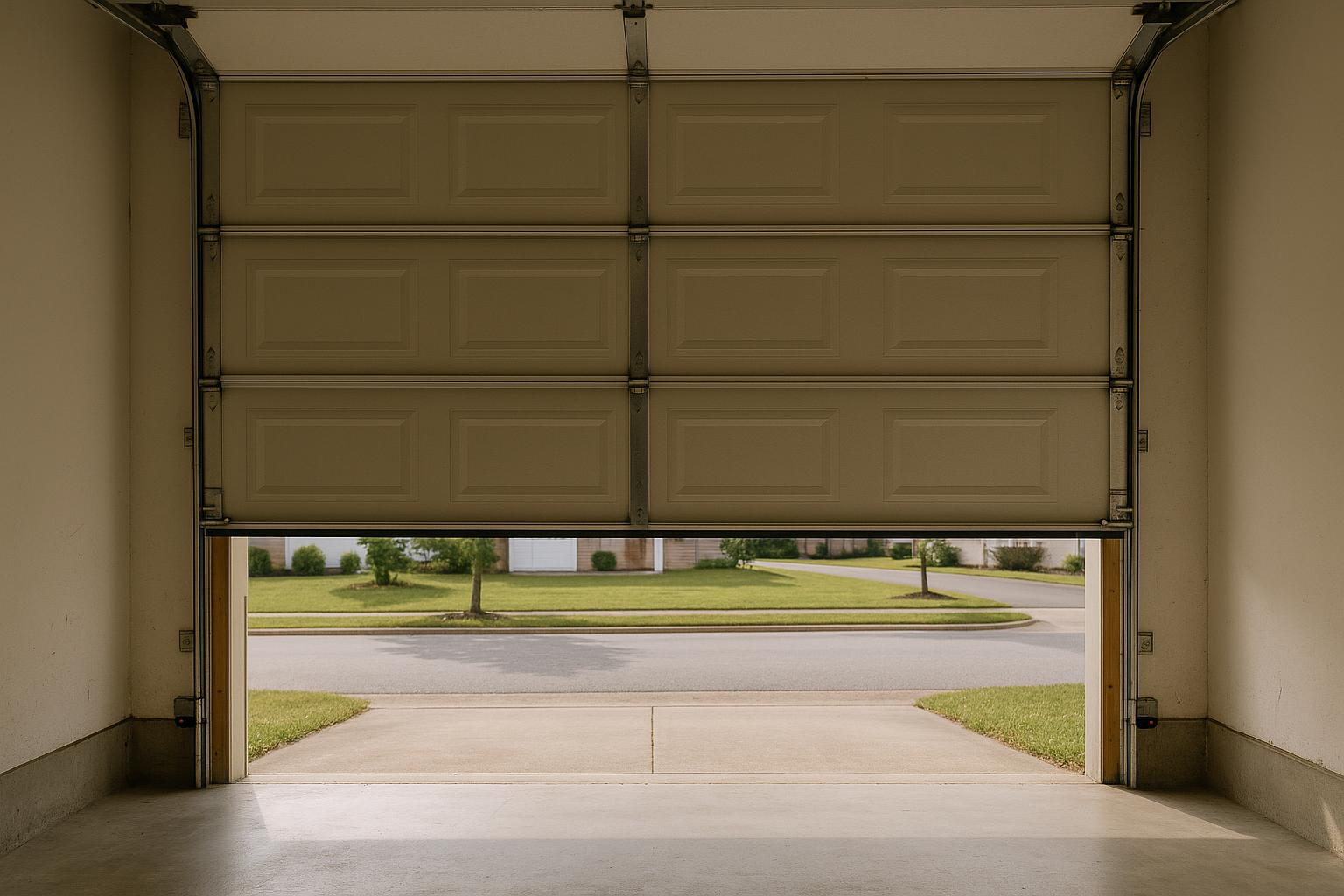
That Frustrating Moment When Your Garage Door Won't Stay Closed
You press the button on your remote, the garage door starts its descent, and then — just before it reaches the floor — it reverses direction and goes right back up. You try again. Same thing. Maybe it works on the third attempt, maybe it doesn't. Either way, you're standing in your Virginia Beach driveway wondering what went wrong.
This is one of the most common garage door complaints we hear from homeowners across the area. The good news is that a reversing garage door usually has a logical, fixable cause. The bad news is that ignoring it can lead to bigger problems down the road, including security risks and more expensive repairs.
Let's walk through the most likely reasons your garage door reverses before closing completely and what you can do about each one.
Understanding Your Garage Door's Safety System
Before diving into specific causes, it helps to understand why your garage door is designed to reverse in the first place. Federal regulations since 1993 require all automatic garage door openers to include safety reversal mechanisms. These systems exist to prevent the door from closing on a person, pet, or object.
There are two primary safety features at work:
- Photo-eye sensors: Two small sensors mounted near the bottom of the door tracks on either side. They project an invisible beam across the opening. If something breaks that beam, the door reverses.
- Auto-reverse mechanism: If the door encounters physical resistance while closing — like hitting an object — it automatically reverses direction.
Both systems are essential for safety, but when they malfunction or get knocked out of alignment, they can cause the door to reverse even when nothing is actually in the way.
Misaligned Photo-Eye Sensors
This is the number one reason garage doors reverse unexpectedly, and it's especially common here in Virginia Beach where humidity, salt air, and seasonal storms can gradually shift things around. The photo-eye sensors need to be precisely aligned with each other to maintain their invisible beam. Even a slight bump from a bicycle, lawnmower, or trash can is enough to knock one sensor off course.
Here's how to check:
- Look at both sensors near the base of the tracks on either side of the door.
- Most sensors have a small LED light. If one is blinking rather than glowing steadily, it's likely out of alignment.
- Gently adjust the misaligned sensor by hand until the light becomes steady.
- Test the door again.
If the lights won't stay steady no matter what you do, the sensor itself may be damaged and need replacement.
Dirty or Obstructed Sensor Lenses
Sometimes the sensors are perfectly aligned but can't see each other because their lenses are dirty. Cobwebs, dust, pollen, and moisture can all accumulate on the small lenses. Living near the coast means dealing with salt spray and humidity that can leave a film on just about everything in your garage.
Use a soft cloth to gently wipe both sensor lenses clean. Avoid using harsh chemicals that could scratch or cloud the plastic. This simple step solves the problem more often than you might expect.
The Close-Limit Switch Needs Adjusting
Your garage door opener has settings called limit switches that tell the motor how far the door should travel in both directions. If the close-limit switch is set incorrectly, the opener thinks the door has hit the ground — or an obstruction — before it actually has. The motor interprets this as resistance and triggers a reversal.
Adjusting limit switches varies by opener model. Some have adjustment screws on the motor unit, while newer models use digital controls. If you're not comfortable making this adjustment yourself, this is a quick fix for a professional technician. Getting it wrong can cause the door to press too hard against the floor, which creates its own set of problems.
Damaged or Worn Tracks
The metal tracks that guide your garage door up and down need to be straight, clean, and properly aligned. Over time, tracks can develop bends, accumulate debris, or shift slightly away from the wall. When the door's rollers encounter resistance from a damaged track section, the opener may interpret that friction as an obstruction and reverse.
Visually inspect both tracks for:
- Visible bends or dents
- Gaps between the track and the wall mounting brackets
- Buildup of dirt, grease, or small debris
- Rust or corrosion, which is particularly common in the Hampton Roads area due to coastal moisture
Minor debris can be cleaned out, but bent tracks or significant rust usually require professional attention. Trying to bend tracks back into shape without the right tools can make things worse.
Broken or Worn Springs and Cables
Your garage door's springs do the heavy lifting — literally. They counterbalance the weight of the door so the opener motor doesn't have to work as hard. When a spring is weakening or a cable is fraying, the door becomes heavier than the opener expects. This extra resistance can trigger the auto-reverse function.
Important safety note: Garage door springs are under extreme tension. A standard double-car garage door can weigh 200 to 300 pounds, and the springs store enough energy to cause serious injury. Spring and cable repairs should always be handled by a trained technician. This is not a DIY job.
Opener Motor Issues
If you've checked everything else and the door still reverses, the problem may be with the opener motor itself. Worn gears, a failing logic board, or electrical issues within the motor unit can cause erratic behavior including random reversals. Openers that are more than 10 to 15 years old are more prone to these kinds of failures.
In some cases, repairing the opener makes sense. In others — especially with older chain-drive models — replacing the unit with a modern belt-drive opener is the more cost-effective long-term solution. Newer openers are quieter, more reliable, and come with features like smartphone connectivity and battery backup.
When to Call a Professional
Some of the fixes above — cleaning sensors, wiping lenses, clearing track debris — are perfectly safe for homeowners to handle. But if the problem persists after basic troubleshooting, or if it involves springs, cables, tracks, or the opener motor, it's time to call in a professional.
At Virginia Beach Garage Door Service, we diagnose reversing issues every week for homeowners across Virginia Beach, Norfolk, Chesapeake, and the surrounding Hampton Roads communities. We show up on time, figure out exactly what's causing the problem, and fix it right the first time so you're not stuck dealing with the same issue next week.
Don't Ignore a Reversing Garage Door
A garage door that won't close properly is more than an inconvenience. It's a security vulnerability for your home and everything stored in your garage. It can also indicate a developing mechanical problem that will only get more expensive to fix if left alone.
If your garage door has started reversing and basic troubleshooting hasn't solved it, give us a call. We'll get it sorted out quickly so you can get back to your routine without worrying about whether your garage is actually secure.